

Prospecting and Soil Sampling
Find Out What’s Actually in the Ground
You’ve staked a property based on regional geology, geophysical anomalies, or proximity to known mineralization. Now you need ground-truth data to determine where to focus exploration dollars. Since 1987, Minconsult has conducted systematic prospecting and soil sampling programs across North America, delivering the boots-on-the-ground work that identifies drill targets, defines mineralized trends, and guides follow-up exploration. Our field teams provide the geological observations and geochemical data junior and mid-tier mining companies need to make informed decisions about their properties.
Soil sampling remains one of the most cost-effective exploration methods, suitable for early reconnaissance through late-stage infill programs. It’s highly scalable, ranging from broad property evaluation to high-resolution grids around known showings. In regions with limited outcrop exposure, systematic soil geochemistry often provides the only practical method for detecting buried mineralization. Our programs combine proprietary field methodology with experienced crews who understand that sample quality determines data reliability.
Our Prospecting and Soil Sampling Services
Reconnaissance prospecting
Outcrop mapping
Rock sampling
Soil geochemistry
Structural measurements
GPS documentation
Photo archiving
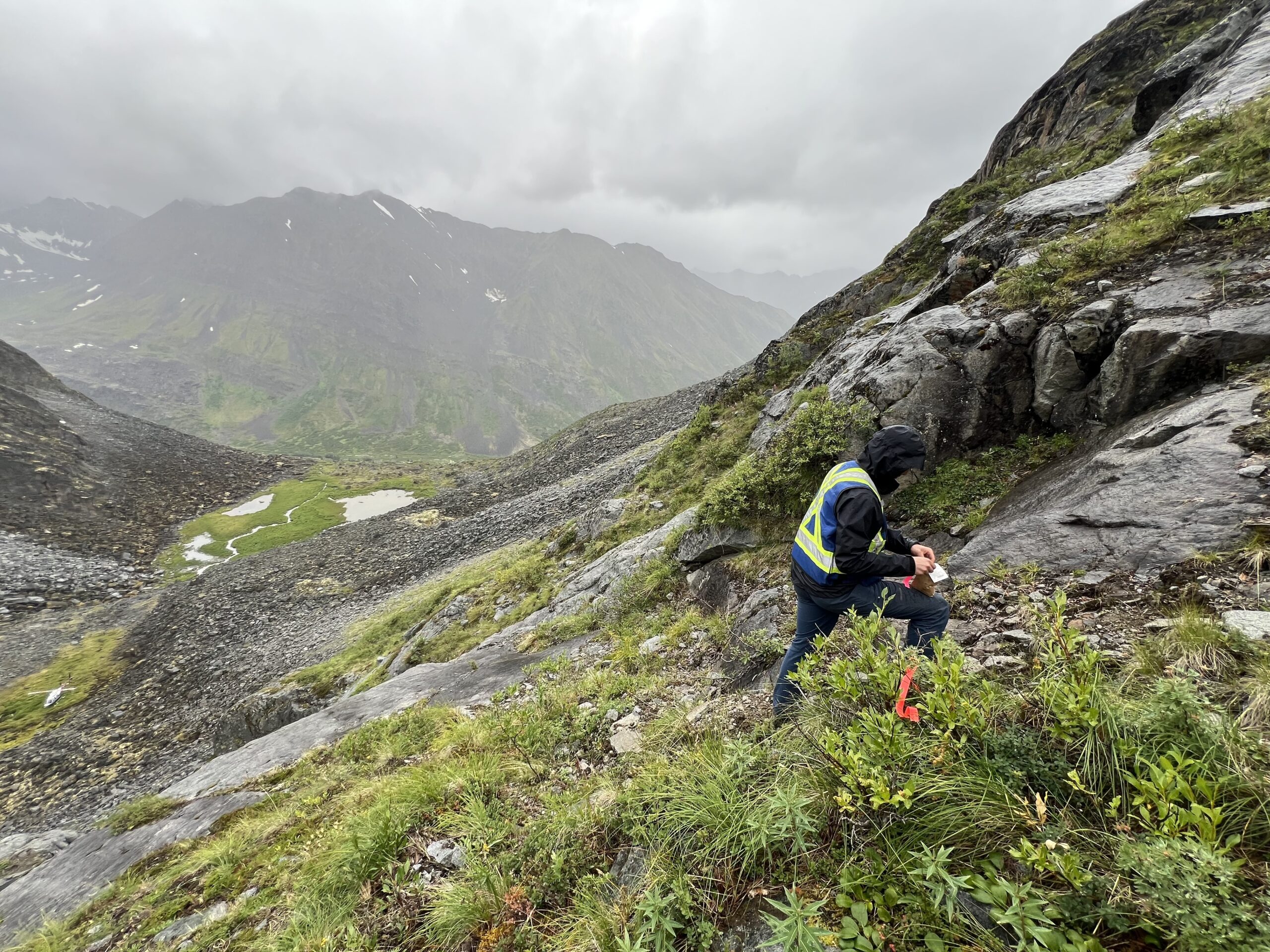
Proprietary Soil Sampling Methodology
Comprehensive Data Acquisition
Minconsult utilizes a proprietary methodology developed in collaboration with industry experts to collect geo-referenced qualitative and quantitative data, alongside physical samples. Every sample station is documented with sample depth, clast descriptions, soil colour, and lithology details. This provides a complete data suite that extends well beyond laboratory geochemistry results. This comprehensive approach helps identify subtle patterns and geological relationships that guide target interpretation.
Versatility in Approach
Our field crews employ sampling methods adapted to regional and geographic challenges. In standard conditions, Dutch augers permit small, deep, high-quality samples. Areas with underdeveloped soils require trowels and hand sieves to ensure the best possible sample quality. Rocky or frozen terrain demands mattocks to break through obstructions and retrieve soil in traditionally challenging environments. This adaptability ensures consistent sample quality regardless of conditions.
Safety-Oriented Crews
Field technicians are trained in ATV/UTV operation, helicopter operations, and safety protocols for remote environments. Our crews are prepared for all environmental challenges, from mountain ridges to boreal forests to desert plains, without compromising safety or productivity. Programs are conducted by experienced personnel who understand that field safety and data quality are both non-negotiable.
Systematic Prospecting Programs
Reconnaissance Property Assessment
You’ve acquired a property and need to understand what’s there. Our prospecting teams conduct systematic traverses to document geology, collect rock and soil samples, and identify areas warranting detailed follow-up. We gather and compile available public geoscience data, then ground-truth it with field observations to build a comprehensive understanding of your property’s mineral potential.
Target Definition for Drill Planning
Prospecting and soil-sampling data define where drilling offers the best probability of discovery. Our geologists compile field observations, geochemical results, and structural data into coherent target models that guide drill planning. We work with your senior geological staff or operate independently to advance properties from reconnaissance through drill-ready target definition.
Integration with Broader Exploration Programs
Because Minconsult provides line cutting, geophysical survey coordination (including UAV/drone services), drill pad construction, and complete drilling support, prospecting and soil sampling integrate seamlessly with your broader exploration strategy. The Minconsult crew mobilizes your camp, builds your pads, and provides core shack geologists, eliminating the coordination complexity of managing multiple contractors in remote locations and contractor handoff delays that plague multi-phase exploration programs.
Frequently Asked Questions
What makes your soil sampling methodology different?
We collect comprehensive qualitative and quantitative field observations at every sample station, not just the physical sample. This proprietary approach, developed with industry experts, captures sample depth, clast descriptions, soil colour, and lithology details alongside GPS coordinates and photographs. The result is a complete data suite that provides geological context for geochemical results and helps identify patterns invisible in laboratory data alone.
Can you handle soil sampling in challenging terrain or difficult conditions?
Yes. Our crews employ sampling techniques adapted to conditions, like Dutch augers for standard terrain, trowels and sieves for underdeveloped soils, mattocks for rocky or frozen ground. We’ve conducted soil programs across mountain ridges, dense forests, muskeg, permafrost, and desert environments. Challenging conditions don’t prevent sampling; they simply require experienced crews with appropriate techniques.
How large a program can you manage?
We handle programs ranging from small property reconnaissance (hundreds of samples) to district-scale surveys with more than 10,000 samples. Extensive geochemical surveys don’t require mobilizing multiple contractors: our crews and logistics systems are designed for high-volume programs while maintaining consistent quality control throughout.
What sample spacing do you recommend?
Sample spacing depends on exploration objectives and terrain. Reconnaissance programs typically use 100-200m spacing for cost-effective property coverage. Target definition work uses 50m spacing. Detailed infill around known showings may use 25m or tighter spacing. We design programs based on your geological model, budget, and decision-making requirements.
How quickly can results inform our next exploration phase?
Field observations are documented in real time and compiled regularly throughout the programs. You don’t have to wait until season-end for preliminary interpretations. Laboratory turnaround typically ranges from 2 to 6 weeks, depending on analytical requirements and lab workload. We provide preliminary interpretations as data arrives, allowing adaptive program adjustments mid-season when results warrant modified coverage or additional sampling.
Do you just collect samples or provide geological interpretation?
Both. Our field geologists provide systematic data collection with proper documentation and quality control. We also compile results, prepare target summaries, and provide geological interpretations that guide follow-up work. The level of interpretation depends on your needs. Some clients have senior staff conducting interpretation and just need reliable field data collection, while others want complete target packages ready for drill permitting.
Ready to Ground-Truth Your Property?
Stop guessing where to focus your exploration dollars. Our prospecting and soil sampling teams deliver the comprehensive field data that identifies real targets.